Castle Crush
- 4.7
- Rating
- 1.00M
- Installs
- Free
- Price

 Analysis by App-foxy
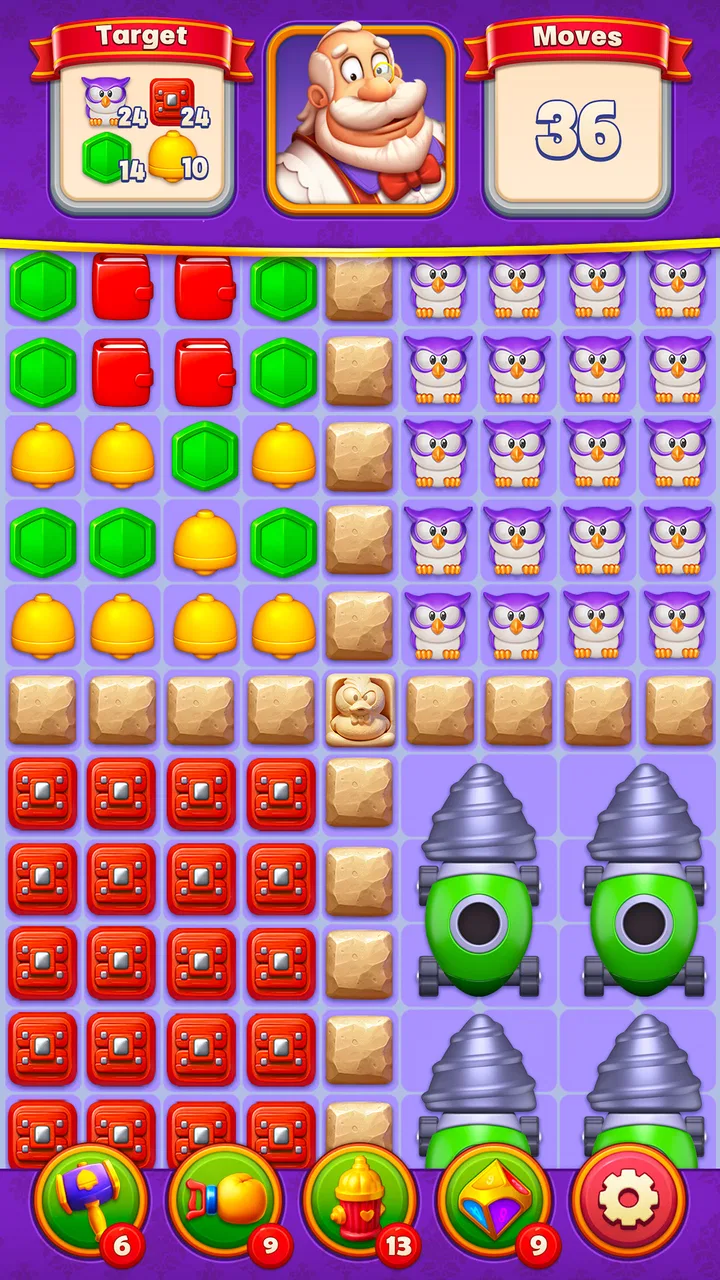
I approached Castle Crush as a quick, casual puzzle game rather than something meant to replace a deep strategy title. Developed by Gaming Factory, it focuses on match-three play with a castle-themed presentation and a simple promise: solve boards, make progress, and keep moving through the journey. That straightforward idea is also its main strength. I can open it when I have a few spare minutes, understand the immediate objective quickly, and put it down without needing a long tutorial session.
It is free to install and suitable for Everyone, which makes it easy to recommend to families and casual players. At the same time, the presence of optional purchases ranging from $0.99 to $99.99 per item means I would still set expectations before handing it to a child or using it as a completely cost-free pastime. The game is currently listed as version 2.61.0 and works on Android 7.0 or later, so compatibility is fairly broad for older devices.
What playing it feels like in everyday use
The best way to understand this game is to imagine a short break during an ordinary day. I might have a few minutes while waiting for an appointment, sitting on public transport, or taking a break from work. A match-three puzzle is a natural fit for that situation because the basic interaction is familiar: look for useful combinations, make a move, and react to the new board. Castle Crush does not ask me to learn a complicated control scheme before I can enjoy the first session.
You May Also Like

 Blood Strike: 2.5 Anniversary
Blood Strike’s Loadouts Turn Every Drop Into a Tactical Gamble
A close look at Blood Strike’s custom loadouts: how fast access to signature weapons reshapes its battle royale rhythm, rewards preparation, and narrows the gap between fights.

 Pandora - Music & Podcasts
Pandora’s Music Is Easy to Start, but Harder to Recover
Pandora’s strength is its low-effort path from a seed to a station. Its weak spot is how much confidence it asks you to place in connection, setup, and quiet recovery.

 8 Ball Pool
 Is Built on Rivalries, Rematches, and Routine
A close look at the rivalries, rematches, shared routines, and unanswered safety questions that turn a quick pool match into a persistent mobile community.

 Samsung Music
’s Quiet Strength Is Playing What You Already Own
Its reach comes less from spectacle than from dependable access to a personal library. That simplicity is both the app’s strongest retention engine and its ceiling.

 AccuWeather: Weather Radar
AccuWeather Review: A Quick, Clear Forecast for Everyday Decisions
For everyday plans, the best forecast is the one you can understand quickly. AccuWeather makes rain timing, radar, and local conditions easy to act on, with a few trade-offs.

 Hill Climb Racing
Why Hill Climb Racing Still Turns Crashes Into One More Run
A tiny car, a bumpy hill and one more upgrade: Hill Climb Racing keeps resurfacing because its simple chaos makes every near-miss feel personal.
More From Our News Desk
View All News


The castle setting gives the familiar format a little more identity than a plain collection of colored pieces. It also helps the game feel like a connected journey instead of a set of unrelated boards. I would not choose it for a rich narrative or a demanding tactical campaign, but the theme is effective at making repeated puzzle sessions feel more purposeful.
That accessibility explains why the game has reached more than a million installs and maintains a 4.7 average from roughly 98 thousand ratings. Those figures suggest that the basic loop works for a large audience, but they should not be mistaken for proof that every player will enjoy the same pace or presentation. Match-three games are naturally repetitive, and Castle Crush is most comfortable for people who like improving one board at a time rather than constantly learning new mechanics.
Where players are most likely to get stuck
The first point of friction is not usually the controls. It is the difference between seeing a possible match and seeing the best available match. New players often make the first obvious move, especially near the bottom or center of the board, without checking what that move opens elsewhere. In a game built around matching, that habit can make a level feel harder than it really is.
I found it more useful to spend a moment scanning the entire board before touching anything. I look for moves that create a larger combination, clear an obstructed area, or open several follow-up possibilities. Even when the game seems designed for quick play, that short pause matters. It reduces the feeling that success depends only on luck and gives each move a clearer purpose.
Another common sticking point is playing too quickly after a board changes. A new arrangement can create a better opportunity than the one I originally planned. If I immediately repeat the same pattern, I may miss a newly opened match. My practical rule is simple: after every significant cascade or board change, I stop and rescan instead of continuing on autopilot.
Players can also get frustrated when they treat every move as equally valuable. They are not. A move that clears a small group may look productive but leave the important part of the board untouched. When I am close to completing an objective, I prioritize the area that directly affects that objective, even if another move produces a more attractive-looking chain.
Small habits that make the puzzle loop easier
One useful habit is to work from the constraints outward. If a level contains a difficult section or a target that is not immediately accessible, I first ask which nearby match can create space. I do not spend every turn chasing the largest visible combination. Sometimes a modest move that opens the right area is more valuable than a bigger match in a harmless corner.
I also avoid using a helpful opportunity simply because it is available. If a strong combination can be saved while I clear another problem, keeping it for the right moment can make the final part of a board less stressful. This is especially useful when the remaining moves are limited or when the board is becoming crowded. The exact value of that decision depends on the layout, but the broader lesson is consistent: think about the next two moves, not just the current one.
A third practical tip is to play in short, focused sessions when I am tired. Match-three games look relaxing, but careless decisions accumulate quickly when I am distracted. If I notice that I am tapping without checking the board, I stop and return later. This costs nothing and is often more effective than repeatedly attempting the same puzzle while frustrated.
For younger players, I would explain the difference between the game being free to start and optional purchases being available. The Everyone rating makes the title broadly approachable, but age suitability does not automatically mean spending cannot occur. A quick conversation about purchases and device settings is sensible before regular play.
Setup checks before blaming the game
Because Castle Crush supports Android 7.0 and newer, the first check is the operating system. On a device running an older version, installation or updating may be impossible. On a compatible phone, I would still make sure there is enough free storage and that the device is not struggling with many other apps running at once. These are ordinary checks, but they prevent a surprising amount of confusion.
If installation stops or an update refuses to complete, I would begin with the basics: confirm a stable connection, restart the device, and try again through the normal app store. I would avoid repeatedly tapping the install button while the connection is unstable, since that can make it harder to tell whether the problem is the game, the store, or the network.
For a game like this, a reliable connection can also matter during setup and updates even if the actual puzzle interaction feels simple. If the download repeatedly fails on mobile data, switching to a trusted Wi-Fi connection is a reasonable test. If it works there, the issue is more likely related to the original connection than to the game itself.
Performance checks are equally practical. Closing unused applications, restarting the phone, and installing available system updates can help when taps feel delayed or the screen behaves unevenly. I would not jump straight to clearing storage or reinstalling, because those steps can create unnecessary complications. First I try the reversible fixes.
It is also worth checking whether the problem happens only in Castle Crush. If other games or apps are slow, the broader device environment is the more likely cause. If only this title is affected, then an app-specific troubleshooting step becomes more reasonable. This simple comparison saves time and avoids treating every phone problem as a game problem.
Recovering a disrupted play session
When a session behaves unexpectedly, I use a gradual recovery process. I first leave the current screen normally if possible, then reopen the game. If that does not help, I restart the phone. Only after those steps would I consider reinstalling, and I would be cautious about doing that before understanding how progress is handled on the device.
That caution is important for any game where a player has invested time. Reinstalling can be a useful last resort for damaged local files, but it should not be the first response to a temporary freeze or loading delay. I would also avoid clearing app data casually, because that is a more disruptive action than clearing a temporary cache and may remove local information.
If a board appears to stop responding, I check whether the device itself still reacts normally. Can I switch applications? Does the phone respond to other taps? If the entire device is frozen, restarting the phone is more appropriate than repeatedly pressing the puzzle. If only the game is unresponsive, closing and reopening it is the cleaner first attempt.
For interrupted progress, I would give the game a moment after reopening before starting another action. A slow device or unstable connection may need time to finish loading. Rapidly closing and reopening can make the situation harder to diagnose. I also make a note of what happened: whether the issue appeared during launch, after a move, during an update, or while switching networks. That detail is useful if the problem continues.
Players should also distinguish a failed attempt from lost progress. A difficult level, an unfavorable board, or a mistake is part of the puzzle experience. It does not automatically indicate a technical fault. I only treat it as a recovery issue when the game closes unexpectedly, stops accepting input, or repeatedly fails at the same point.
When the app is not the cause
Some complaints that sound like game problems are actually caused by the phone, network, or user expectations. For example, a device with very little free space may behave unpredictably during updates. A weak connection can make loading feel broken even though the installed game itself is functioning. Background battery restrictions or aggressive system cleanup can also interfere with how an app resumes after being left idle.
I would test one variable at a time. First I would try the game after a restart. Then I would compare Wi-Fi with mobile data, if both are available. Next I would check whether other applications show the same delay. This is slower than trying five fixes at once, but it gives me a much clearer answer and reduces the chance of changing something unnecessarily.
There is also a human factor. Castle Crush is designed around repeated puzzle decisions, so a player who expects a fully different experience in every session may judge it too harshly. Its appeal comes from the rhythm of recognizing patterns, choosing priorities, and gradually advancing. If that loop feels repetitive after a few sessions, no troubleshooting step will change the underlying fit.
Likewise, someone looking for a competitive multiplayer experience, a large role-playing system, or a story-heavy adventure should probably choose another category. This is a focused puzzle game. Its simplicity is useful when I want a low-commitment activity, but it is a limitation when I want extensive customization, complex planning, or a strong social layer.
Free access and the purchase decision
The free entry point is a genuine advantage. I can try the core experience without paying upfront and decide whether the match-three loop suits me. That is particularly helpful for casual players who do not want to commit to a premium game before knowing how long they will keep playing.
Optional purchases from $0.99 to $99.99 per item create a different consideration. I would not assume that spending is necessary simply because purchase options exist, but I would pay attention to how I feel when a puzzle becomes difficult. If I start thinking about buying something mainly because I am frustrated, I would close the game and return later. That is a healthier test of whether the game is enjoyable on its own.
For parents, I would combine the Everyone rating with device-level purchase controls and a clear family rule. The age label describes the content audience; it is not a substitute for managing spending. For adults, the same principle applies in a quieter way: set a personal limit before playing rather than making the decision in the middle of a difficult session.
How it compares with familiar puzzle alternatives
Compared with a minimalist match-three game, Castle Crush offers more atmosphere through its castle theme and sense of a journey. That can make progression feel more inviting for players who want a little context around the boards. In exchange, anyone who prefers an extremely clean interface may find the themed presentation less direct than a bare puzzle board.
Compared with a premium puzzle game, its free availability makes experimenting easier, but the optional purchase structure may be less appealing to people who prefer paying once and removing monetization from the experience. A premium alternative can also be a better choice for someone who wants a carefully authored puzzle campaign with a fixed ending rather than an ongoing sequence of casual challenges.
Compared with a deep strategy game, Castle Crush is much easier to pick up and put down. I do not need to remember a large rule set or manage a long-term plan between sessions. The trade-off is that the strategic depth comes from board reading and move selection, not from building an elaborate system. That makes it a better fit for short breaks than for players seeking a demanding, layered strategy experience.
Who should try it, and who should skip it
I would recommend it to someone who enjoys match-three puzzles, wants a themed setting, and values quick sessions. It is also a reasonable option for families looking for an accessible game, provided purchases are handled responsibly. The broad device support helps if the player is using an older Android phone rather than a recent flagship.
I would be less enthusiastic for someone who dislikes repeating a familiar puzzle format, wants guaranteed offline access, or expects every stage to introduce a major new idea. I would also point competitive players elsewhere, since the main attraction here is personal puzzle progress rather than the kind of direct competition they may be seeking.
My practical recommendation is to give it a fair trial during several short sessions instead of judging it from one board. Pay attention to whether you enjoy scanning for better moves and recovering from mistakes. If that process feels satisfying, the castle theme adds enough personality to keep the routine pleasant. If the basic matching loop already feels stale, extra progression will not solve that problem.
My practical verdict
Castle Crush is an approachable free puzzle game from Gaming Factory that succeeds when I want a familiar match-three activity with a light castle-themed journey. Its greatest strength is convenience: the rules are easy to understand, the sessions can be brief, and the game is available to a wide range of Android users. The 4.7 average and large install base reflect strong appeal, although they cannot replace my own judgment about repetition and purchase pressure.
I would install it for short breaks, relaxed pattern-solving, or a family-friendly starting point in the puzzle category. I would skip it if my priority were a premium, story-led campaign or a complex strategy system. The most useful way to approach it is to play thoughtfully, troubleshoot in small steps when something goes wrong, and avoid turning a difficult board into an automatic reason to spend money.
Overall, I see it as a solid casual recommendation rather than a must-have for every player. When I treat each board as a small problem instead of rushing through obvious matches, the experience is more rewarding. If you want an easy-to-start match-three game with a castle flavor, Castle Crush is worth trying for free.
Its current version, 2.61.0, gives prospective players a clear starting point when checking compatibility, while the Everyone rating keeps the content broadly accessible. I would still verify that the phone meets the Android 7.0 requirement, keep the device reasonably free of storage and background load, and manage in-app purchases before regular play. With those practical details handled, the game delivers exactly the kind of low-commitment puzzle session it is best suited to provide.
FAQs for Castle Crush
01What is Castle Crush and how does the gameplay work?
Castle Crush is a real-time multiplayer strategy card game in which you build a deck of troops, spells, and defensive units before entering battle. Your goal is to destroy the opponent’s castle while protecting your own. Matches usually take only a few minutes, and success depends on placing cards wisely, managing elixir or energy, and adapting to the enemy’s strategy rather than simply deploying the strongest units.
02Is Castle Crush free to download and play?
Castle Crush can generally be downloaded and played for free on supported Android and iOS devices. However, the game includes optional in-app purchases that may provide gems, card packs, upgrades, or other progression resources. You do not need to pay to start playing, but free players may need more time and patience to unlock and improve cards compared with users who choose to spend money.
03Does Castle Crush require an internet connection?
Yes, Castle Crush is primarily an online game because its main battles take place against other players in real time. A stable internet connection is recommended to reduce lag, disconnections, or lost matches. Although some menus or collection features may load without an active connection, you should not expect a complete offline experience or the ability to play full competitive battles without internet access.
04Are in-app purchases and advertisements included in Castle Crush?
Castle Crush includes optional in-app purchases and may also display advertisements or promotional offers, depending on your device, region, and current version of the game. Purchases can speed up card collection and progression, but they are not strictly required to enjoy the basic gameplay. Parents should review the device’s purchase restrictions, since children may otherwise access paid items through the app.
05Is Castle Crush suitable for children and beginners?
Castle Crush is relatively easy to understand for beginners because battles use straightforward card placement and lane-based tactics. Nevertheless, it includes online competition, chat or social features in some versions, advertising, and optional purchases. Parents should check the game’s age rating and privacy settings before installation. New players should also expect a learning period while discovering effective deck combinations and countering different enemy units.
Pros
- Quick matches make it easy to play during short breaks.
- Large card collection offers plenty of deck-building possibilities.
- Simple controls are accessible for new players.
- Clan features add social interaction and friendly competition.
- Regular events can provide extra rewards and fresh challenges.
Cons
- Progress can feel slow without spending money on upgrades.
- Matchmaking may place newer players against stronger decks.
- Random card draws can make some battles feel luck-driven.
- Limited energy or rewards may restrict longer play sessions.
- Frequent offers and purchases can feel intrusive to some players.

Castle Crush
Gallery